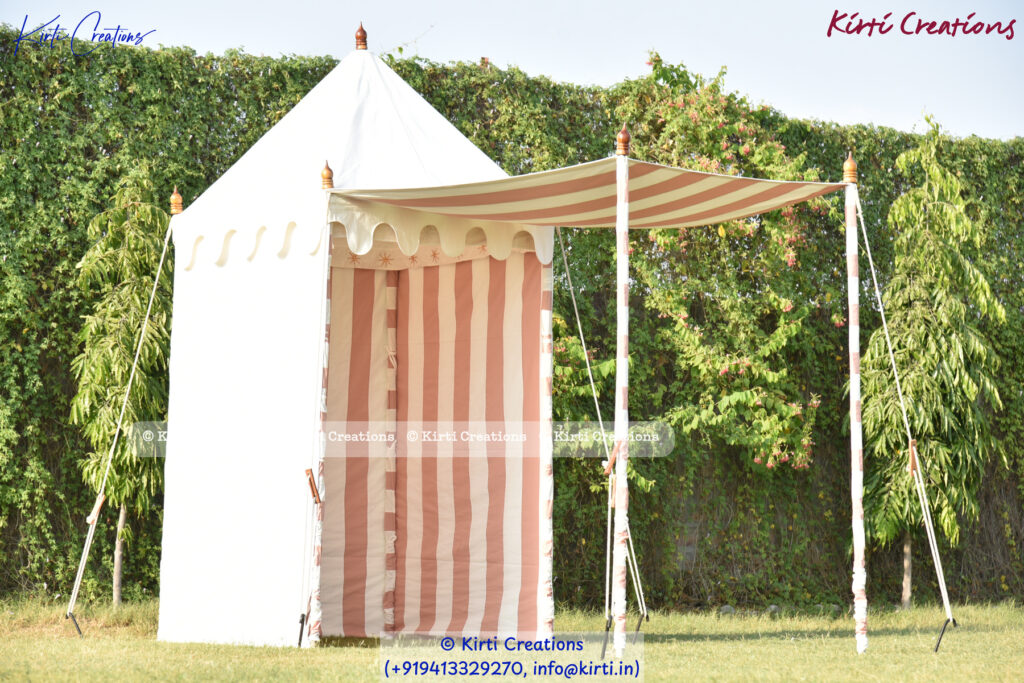
Creating layered spaces with Moroccan tents is about balance. The most important aspect is to create a luxurious and inviting environment while not being overly dominant in the overall environment. If layering is done correctly, it creates depth and intimacy while maintaining openness and flow.
A well-designed Moroccan tent creates clear pathways for movement, defined areas with different purposes and resting areas while creating visual harmony throughout. The intention of layering is not to continue to add more elements; rather, every element should be placed in a precise and clear way.
Understanding The Role Of Layering In Spatial Design
In a traditional Moroccan tent setup, layering creates a smoother transition between two or more surfaces within a single space by introducing subtle boundary lines. Instead of using rigid separations to divide an area, layering creates transitions that feel more organic and fluid.
When layering is used correctly within the context of the Moroccan Tent, the result is an overall sense of motion and movement within the boundaries of an area without creating a sense of disorder or a cluttered environment. Each layer serves a purpose to enhance an experience by providing privacy, facilitating interaction, or increasing the perceived spatial depth.
A thoughtful approach to layering creates a space that feels polished rather than crowded.
Defining Zones Without Closing The Space
A key component of layering is the definition of zones without compromising openness. The space should flow together as one cohesive unit, even though it has multiple functions or purposes.
To accomplish this, seating arrangements, carpet placement, and the way furniture is oriented can be altered. There may be several low seating clusters, lounge areas, and dining options within a single large tent, yet they will still be defined as different zones. The transition from one zone to another should not be jarring, but rather allow for ease of movement from zone to zone.
The result is an organised but relaxed layered tent layout that provides structure and flexibility.
Using Textiles To Create Depth And Soft Separation
Textiles are an important tool in creating layered spaces within a Moroccan tent. They help to create richness, depth of texture, and visual interest in a space and assist in creating a sense of separation between zones of space without establishing hard borders.
Layered rugs, draped textiles, and soft partitions will separate areas without losing continuity. It is important to use a variety of textures and patterns in textiles so that there is not a visual overload (even though there may be multiple points of interest). All textile elements need to work together to produce the same colour palette and cohesive design.
This approach creates depth within the space, making it feel warm and inviting rather than dense or crowded.
Balancing Furniture Placement With Open Space
It is important to arrange furniture correctly to allow for comfort and visual clarity in a layered environment. Low-level furniture and precise placement of the furniture are used within Moroccan tent interiors to help achieve this open concept.
Do not fill in every space with furniture. Provide intentional areas between the pieces of furniture to help create a separation between areas of the room while still allowing for some connection. This will allow guests to enjoy a spacious tent while still having an intimate seating area if desired.
With a well-arranged layout, guests will have access to various parts of the room and will feel that they are given the ability to move freely.
Enhancing Intimacy Through Lighting And Scale
Lighting is one of the best ways to enhance intimacy in any layered space. In the case of a Moroccan tent, using soft, ambient lighting can create defined zones of various colours and add warmth to the space without visually cluttering it.
By using lanterns, pendant fixtures, and soft lighting at varying heights, a warm, inviting feel is achieved with added depth and dimension. Layered lighting is also a way to enhance the overall ambience of the tent while directing how people experience each space within the tent.
In addition to lighting, scale is also very important. Having a consistent proportion throughout the space will allow no one piece to dominate the overall feel of the space and will create a harmonious and well-balanced design for the entire tent.
Maintaining Elegance Through Restraint
Moroccan design offers many layers of richness; however, limiting the number of layers is critical to make the layered spaces visually interesting while not overwhelming the visitor’s senses.
The layered components of the room must have a purpose, but they must also create a visual connection with each other. To achieve this, use a common colour palette, similar textures, and organised placement of items to provide visual clarity in the room.
If too many layers are added, a lack of elegance will develop, and each layer will not be viewed separately.
Conclusion
Layering Moroccan tents requires a thoughtful approach in order to create a space that feels intimate, rather than overcrowded. A balance between depth and openness; structure and fluidity; richness and restraint is the goal.
At Royal Tent, we craft Moroccan tents using artisanal methods, designed to bring balance and spatial harmony. Each space is thoughtfully layered to feel elegant, welcoming, and deeply immersive.
Connect with us to design a Moroccan tent space that is thoughtfully layered, visually balanced, and truly exceptional.