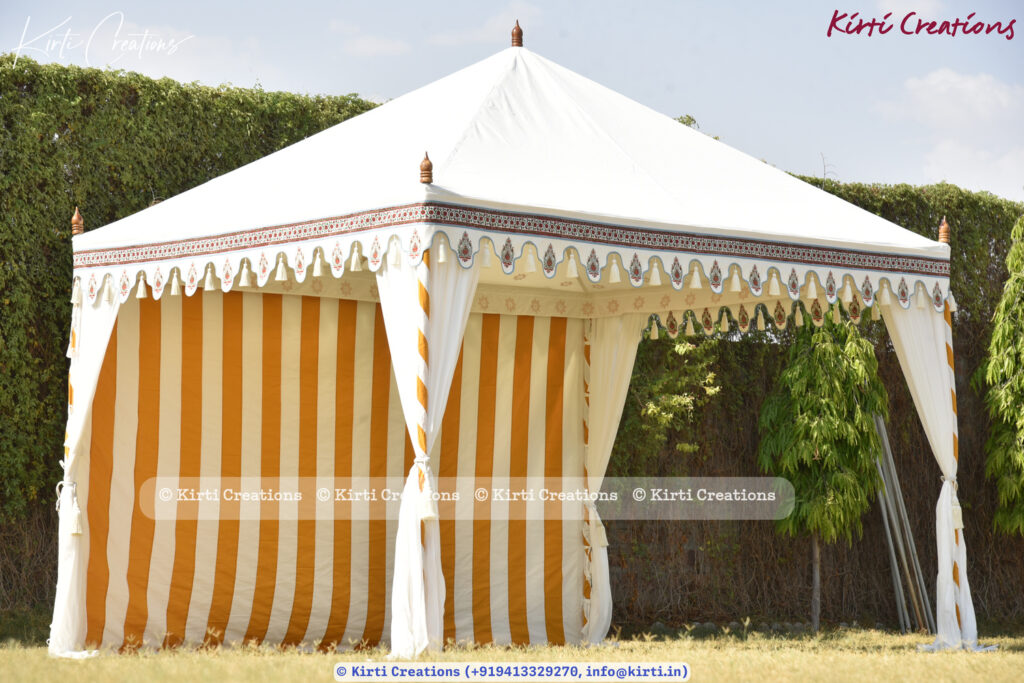
The value of a handmade tent lies not only in its final appearance but in the process that shapes it. Unlike mass-produced alternatives, a handmade tent represents the time and effort of an individual artisan who has taken into consideration precision, material quality, and how the tent will be erected while respecting its surroundings.
Furthermore, for those who wish to have a unique product with high-quality features, the difference between a handmade and mass-produced product is immediately apparent. A handmade tent will exhibit a level of attention to detail and distinctiveness that mass production cannot achieve.
The Foundation Of A Handmade Tent
At the core of every handmade tent design is a carefully planned structure. Before materials are cut or assembled, the structure, the proportions, the floor, and the interaction with surrounding objects are carefully planned.
The initial planning of a handmade tent establishes the foundation upon which subsequent construction is based. In addition to creating aesthetically pleasing tents, a well-planned base of construction ensures that the functions will work together effectively.
By defining these elements at an early stage in the production process, the entire construction will be well-planned. Each subsequent step will use these guidelines to help reduce inconsistencies, thus improving cohesion between all parts of the tent.
Material Selection And Preparation
Choosing the right materials is the first step to achieving quality in a handmade tent. Whether it’s fabric, lining, or structure, everything is chosen carefully so that it has a high-quality build that will last.
Just as important as the selection of materials is their preparation. The materials must be measured, treated, and organised to facilitate precision in the construction of the tent.
In addition to making construction easier, preparing the materials allows for any adjustments to be made prior to construction to help ensure that every element fits together properly to achieve the desired result. As a result, the efficiency of the building process is increased; however, care is still taken with all aspects of each build.
Bringing The Structure Together
Once the materials have been prepared, they are now going to be carefully measured out and assembled together. This ensures that each individual piece has been accurately measured before being assembled.
This involves taking extra precautions when measuring, since an inaccurate measurement could potentially cause problems within the overall structure of the tent; if something is incorrectly measured, it may no longer fit as originally intended when it was manufactured.
Methodically progressing through these steps ensures that the tent will be constructed in an orderly and controlled fashion.
Overall, the assembly process will result in a completed tent that is exactly how it was designed to be, and all of its parts will work together in a balanced manner.
Precision In Craftsmanship
Precision is the distinguishing feature of a custom handmade tent, and the amount of care that goes into each detail is what differentiates each tent. The precision of every seam, joint, and connection provides structural strength and visual consistency.
This level of precision cannot be accomplished through automation but requires the skill and knowledge of an experienced artisan who works with the materials to build a tent with a clear focus and vision.
Detailing And Finishing Elements
The character of a handmade tent is defined by its detailing. The alignment of the patterns and finishing of the edges contribute to the structure as a whole, and that is to say, to the overall composition.
The details are not simply added on as an afterthought, but are incorporated into the making process so that at the end of the making, they create a sense of cohesion rather than assembly.
The attention to finishing is what gives the tent a continuous visual identity and provides for every element of the finished product to appear deliberate and well-finished.
Balancing Structure And Aesthetics
A well-crafted handmade tent structure achieves a balance between form and function. The design of the structure must support the intended use of the space while also exhibiting a strong visual presence.
Every decision made throughout the entire process considers both function and aesthetics. Each decision considers both usability and visual refinement, as well as aesthetic improvements to the structure, creating a perfect balance between how well it operates and how good it looks.
Bottom Line
A handmade tent is the result of a process that emphasises technical accuracy, high-quality materials, and great craftsmanship. Each piece of the tent has been created purposefully so that when assembled, all parts will work together cohesively to create an aesthetically pleasing and functional tent.
This method provides an overall feel of balance and sophistication that conventional production does not allow. The combination of details results in an aesthetically pleasing and structurally sound space.
At Royal Tent, this process defines how each handmade tent is brought to life, with a focus on detail, balance, and enduring quality. Get in touch to create a handmade tent that is thoughtfully crafted and built to last.